Your Face Is a Layer Cake: How Skin Ages, and Why Lips Lose Volume
By Gaby
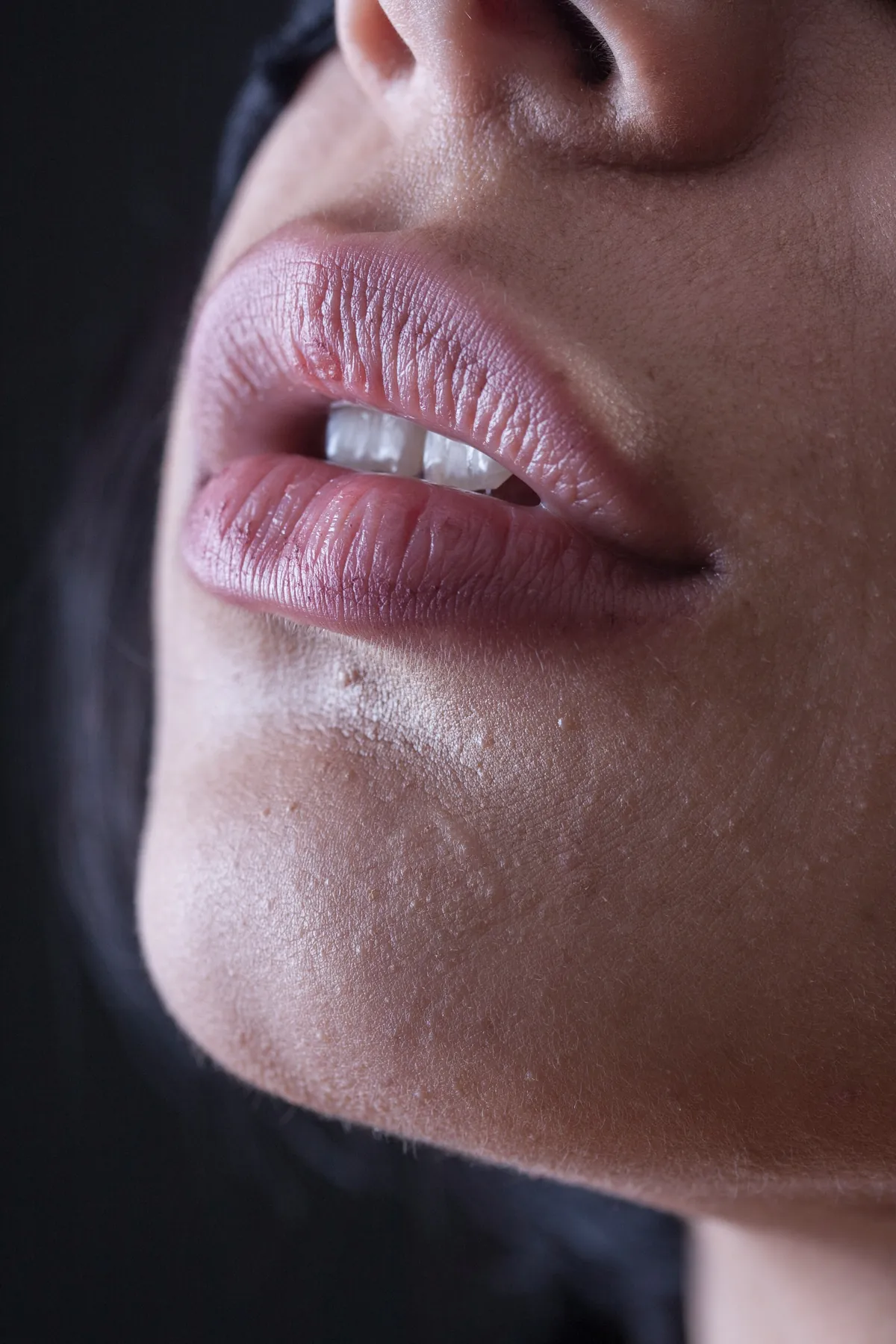
One day you catch your reflection and something about your mouth looks different. The upper lip seems a little longer. The pink part looks thinner. There are fine lines where there didn't used to be any, and your lipstick has started to wander.
It feels sudden. It isn't.
On a recent episode of The Mel Robbins Podcast, Mayo Clinic dermatologist and physician-scientist Dr. Saranya Wyles made a point I loved: those "all of a sudden" changes people notice in their skin have usually been building quietly for months, even years. Your skin, she said, works like your car's check engine light. What shows on the surface reflects what's been happening underneath.
So let's look underneath. This article draws on her explanations from that episode, plus well-established dermatology, to explain how skin ages, why the lips age in their own special way, and what's genuinely worth your time and money.
The layer cake: how your face is built
Dr. Wyles used a brilliant prop to explain facial aging: a slice of layered cake, sitting on a cake board, sitting on a platter. Picture it with me.
- The top layer of cake is your epidermis. This is the outer skin you see and touch. It's constantly renewing itself, roughly every month, shedding old cells and making new ones.
- The middle layer is your dermis. This is the scaffolding. It holds your collagen and elastin, the proteins that make skin firm and springy.
- The bottom layer is your hypodermis. This is the fat layer. It cushions, insulates, and gives your face its soft, full contours.
- The cake board is muscle and ligaments. Dr. Wyles called this layer the "Spanx" of your face (its technical name is the superficial muscular aponeurotic system, or SMAS). It holds everything up.
- The platter is your bone. Everything else sits on it.
Here's the key idea: aging happens in every layer at once. When people think about "aging skin," they usually picture the top layer, the lines and spots. But much of what changes the shape of your face, especially around the jaw and the mouth, comes from the layers underneath.
What changes in each layer as we age
The top layer: slower renewal
In your twenties, your skin repairs and renews itself quickly. With age, that turnover slows down. Cells hang around longer at the surface, skin can look duller, and it heals more slowly. Dr. Wyles noted that wound healing, which her Mayo Clinic lab studies, is noticeably faster in younger skin than in older skin.
The middle layer: less collagen, and stiffer collagen
Collagen production starts to drift down in early adulthood, and the drop speeds up a lot around menopause, when estrogen falls. Research has found that women can lose a large share of their skin collagen in the first few years after menopause.
There's a second, sneakier problem that Dr. Wyles explained: glycation. When there's a lot of sugar in your system over the years, sugar molecules stick to collagen and elastin. She described it as "sticky sugars." That damaged collagen becomes stiff and breaks down more easily, so the scaffold loses its bounce.
Add sun exposure on top, which breaks down collagen from the outside, and you get thinner, looser skin.
The bottom layer: shrinking fat pads
Your face has distinct pockets of fat, called fat pads, that give you full cheeks and soft contours. Over time, some of them shrink and some slide downward. Think of how a child's round cheeks give their face that youthful look. As midface volume fades, the face looks older and more tired, even when the skin itself is fine.
Dr. Wyles pointed out that rapid weight loss, including on GLP-1 medications like Ozempic, can speed up this same fat loss in the face. She mentioned that for roughly every 20 pounds lost on these medications, people may lose around 10% of their facial volume. This is the change people call "Ozempic face."
The cake board: a looser support system
The muscles and ligaments that hold the face up loosen over time. That's part of why the jawline softens and jowls appear. Dr. Wyles was clear about this: with jowls, the skin itself usually isn't the main problem. It's the support structure underneath.
The platter: bone loss in the face
This was the part of the episode that surprised a lot of listeners. The bones of your face lose density as you age, the same way bones elsewhere in the body can. When Dr. Wyles moved her cake from a tall pedestal onto a shorter plate, everything above it sat lower. That's what happens to your face: the skin, fat and muscle that used to be supported now have less to hold on to.
She also mentioned something people rarely connect to their face: teeth. As we age, teeth can crowd and shift, and that can change the shape of the jawline and the area around the mouth. Brushing, flossing and regular dental care are, quite literally, part of facial aging care.
Why your lips age differently from the rest of your face
Now for the lips. Lip skin is unlike any other skin on your body, and that's why it shows age in its own way.
- It's extremely thin. The pink part of your lip, called the vermilion, has a much thinner outer layer than the skin on your cheeks. Its red-pink color comes from tiny blood vessels showing through.
- It has no sweat glands and almost no oil glands. Your face has its own built-in moisturizing system. Your lips don't. That's why they dry out and crack so easily, and why lip balm is a daily need, not a luxury.
- It has very little melanin. Melanin is the pigment that gives skin some natural protection from the sun. Lips have very little of it, so they're especially vulnerable to sun damage, even though most of us never put sunscreen on them.
- It sits on top of a muscle that never stops moving. The ring-shaped muscle around your mouth works all day as you talk, eat, drink and smile. Over decades, that constant puckering helps etch the vertical lines above the lip.
How all of this adds up in the lips
Put the layer cake and the lip's special skin together, and you get the classic changes women notice. (MRI studies have measured these changes too, which we cover in You're Not Imagining It: Your Lips Really Do Change.)
- Thinner lips. Less collagen, less fat, and less support underneath mean the lips lose volume, especially the upper lip.
- A longer, flatter upper lip. The space between your nose and the top of your lip tends to lengthen with age, and the upper lip can flatten and roll inward, hiding more of the pink.
- A softer Cupid's bow and lip line. The crisp border of the lip blurs, which is why lipstick "bleeds" into fine lines.
- Vertical lines above the lip. These come from thinner skin plus years of muscle movement, and smoking and sun can make them deeper.
- Corners that turn down. As support drops, the corners of the mouth can droop, which can make a resting face look sad or tired.
None of this means anything is wrong with you. It's the normal story of a face that's been living. But it does explain why so many women start looking at lip treatments in their forties and fifties: they want back some of what was always theirs.
What actually helps: inside out and outside in
Dr. Wyles described skin aging as a two-way conversation. From the outside in, there's sun, pollution and smoke. From the inside out, there's sleep, food, hormones, stress and genetics. Her approach rests on five "pillars" for healthier skin over time: sleep, diet and hydration, movement, stress recovery, and topicals and treatments. Here's how they apply, with the lips in mind.
1. Sleep: your skin's repair shift
Your skin runs on a body clock. During the day it's in defense mode, protecting you from sun and pollution. At night it switches to repair mode. Dr. Wyles cited research showing that good sleepers recover their skin barrier about 30% better than poor sleepers, and that just two nights in a row of only three to four hours of sleep measurably weakened women's skin barrier. If your face looks puffy and tired after bad nights, that's not your imagination.
2. Food: fewer sugar spikes, more fiber
Because sugar damages collagen through glycation, Dr. Wyles recommends steadier blood sugar: more vegetables, beans, whole foods and fiber, and fewer sugary snacks. One of her tips: if you're having dessert, pair it with some fiber. She also shared her grandmother's "ABC" habit from South India, apples, beets and carrots, blended with flax or chia seeds and turmeric.
3. Water plus moisturizer
Drinking water matters, but Dr. Wyles explained that drinking alone won't hydrate your skin barrier. You also need to moisturize from the outside. She suggested thicker moisturizers from a tub rather than a pump, and looking for "fragrance-free," not just "unscented." (Unscented products can contain a masking fragrance.) For lips, a plain, fragrance-free balm or ointment does the same job.
4. Strength training
This one was a happy surprise. Dr. Wyles described a study in middle-aged women where weight training improved skin elasticity and the dermis, the collagen layer. Muscle and skin talk to each other, so building strength, especially if you're losing weight, helps support your skin too.
5. Stress recovery
Your skin has its own stress-hormone receptors. Dr. Wyles cited research showing that a major life stressor, such as going through a divorce, slowed the skin's ability to recover from injury. Managing stress isn't just good for your mind; your skin feels it too.
6. Sunscreen, including on your lips
Dr. Wyles called sunscreen one of the best things you can do for your skin: broad-spectrum, SPF 30 or higher, reapplied regularly. On the show she tested products under a UV camera, and the mineral, chemical and tinted sunscreens all blocked UV, while coconut oil and beef tallow, both trendy "natural" options, showed no protection at all. She also recommends keeping sunscreen in the car, because UV comes through car windows.
Since your lips have so little natural protection, use a lip balm with SPF 30 or higher, and reapply it after eating and drinking.
7. Topicals and treatments
Dr. Wyles splits skincare by time of day. In the morning, think defense: an antioxidant like vitamin C (with ferulic acid), moisturizer and sunscreen. At night, think repair: a retinoid or retinol, introduced slowly, and a barrier moisturizer. If your skin is peeling and red, she says, slow down or switch to a gentler retinoid. She's also a fan of topical copper peptides, which have research behind them, but she's skeptical of injected peptide "stacks" sold for skin glow.
Where lip treatments fit in
Healthy habits protect what you have and slow down the changes. But they can't fully replace lost bone, shrinking fat pads, or a muscle that's spent decades tucking your upper lip inward.
That's where in-office treatments come in, and why there are different ones for different layers:
- A lip flip works on the muscle layer. A few small units of Botox relax the edge of the muscle around the mouth, so the upper lip rolls slightly outward and more of its pink shows. It's subtle, quick, and doesn't add volume. You can read the full guide in What Is a Lip Flip? Everything to Know Before You Book.
- Lip filler works on the volume layer. It adds back fullness and shape where collagen and fat have thinned.
- Collagen-stimulating treatments, such as certain lasers, microneedling and ultrasound devices, work on the scaffold layer over time.
The right choice depends on which layer is behind the change you're seeing, which is exactly what a good injector should look at in your consultation.
The bottom line
Your lips don't change because of one thing. They change because every layer of the cake changes together: skin gets thinner, collagen gets stiffer, fat pads shrink, support loosens, and bone slowly recedes. Lip skin, thin and without its own oil or sun protection, simply shows it first.
The good news, as Dr. Wyles put it, is that skin is remarkably responsive. Sleep, steady blood sugar, strength training, moisture and sunscreen all make a real difference. And if you'd also like a little help bringing back the lip you remember, that's your choice to make, and a lovely one.
When you're ready, find a verified lip flip provider near you.
Source: Dr. Saranya Wyles, Mayo Clinic dermatologist and physician-scientist, interviewed on The Mel Robbins Podcast.
* Notice: this article is not medical advice. Please read our disclaimer.